The Decemberists – The Crane Wife

Another dip back into the past, this time from April 2007!
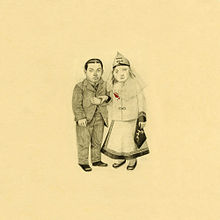
I only started listening to the Decemberists a couple of months ago. I started with their first record, Castaways and Cutouts, I’ve started kinda working my way forward.

‘Cept I kinda skipped ahead a bit and picked up their latest record, The Crane Wife, last week.

Sometime between that first record and the latest one, the Decemberists discovered a couple of things: 1) an electric guitar, and 2) the work of Styx circa “Lady.”

This isn’t necessarily a bad thing.

Their 1870s meets 1970s aesthetic actually works for the most part on this record. Thematically, it’s a loose song cycle based on a Japanese folk tale involving a man who takes a crane woman as his wife. The album includes two lengthy multipart songs: “The Crane Wife,” which is broken up into “Part 3” (which opens the album) and “Part 1 & 2” (which comes near the end of the record), and “The Island,” a track that sounds something like a prog rock epic about immigration, class struggle, dueling, and drowning. “The Island” features a section that nicks the warblely synth line from “Band on the Run,” with the twist that it’s performed by a string quartet. Part of “Come and See,” the first section of “The Island,” sound like something out of Emerson, Lake, & Palmer or post-Tommy Shaw Styx.

But lest you think it’s all epic-length story songs, fear not: the Decemberists can knock together a folky, poppy song in the 3-4 minute range with ease and poise. “Yankee Bayonet” is an effortless, sprightly tune about…well, a Civil War soldier and his lady love. “The Perfect Crime No. 2” races along breathlessly. “Shankill Butchers” is a creepy, old-fashioned “keep the kids in line” lullaby with a slow, stuttered rhythm. “Sons and Daughters” closes the record with a sweet, folky surge and a note of hope.

The album really holds together well as a whole, though “The Island” does drag after awhile and “The Crane Wife” could’ve been condensed to one part rather than three. But really, it’s a solid collection. The songs are strong and evidence a growth and a great sense of songcraft. It’s not for everyone–not everyone is gonna groove on subject matter mostly drawn from the 19th century–but for those that can dig into it, it’s a very rewarding listen.
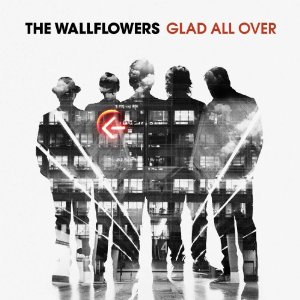
The Wallflowers – Glad All Over

A new Wallflowers album is always a welcome sight, in my eyes. Admittedly, I was concerned that it wouldn’t be all that different than Jakob Dylan’s solo stuff of late (I had a similar concern about the solo stuff sounding too much like Wallflowers stuff, a problem which was essentially a non-starter when I finally heard it). So I came in with some concern: this is a very different band than the one that kicked off with the self-titled Wallflowers debut 20 years ago, but it also seems like a different band than the one that put out Rebel, Sweetheart in 2005.

This time around, the Wallflowers have a more muscular, rougher edge to their work than in their past few records. There’s an edginess to their efforts here, and much of the smooth guitar and organ work from records like Red Letter Days and Rebel, Sweetheart are gone. It feels like an organic growth, though, not a conscious effort to diverge from the past. This feels like a tougher rock record, and it feels earned. There are very few (what I’d think of as) typical Wallflowers songs on this record. “First One in the Car” feels the most Wallflowers-y, and while it’s not a bad song, it doesn’t really do much that they haven’t done before. But album opener “Hospital for Sinners” doesn’t really sound much like anything they’ve done before. Nor does first single “Reboot the Mission,” which to my ears has a definite Clash-circa-Sandinista feel to it, and that ain’t a bad thing. “Misfits and Lovers,” one of two songs to feature Mick Jones on guitar, is a standout track, with propulsive rhythms and a catchy hook. “The Devil’s Waltz” is a clever tune, and while “Constellation Blues” drags a bit, it’s an interesting examination of the life of a soldier.

Honestly, there’s not a bad song on the record, which makes me quite happy. It was one of those that I immediately restarted as soon as I got to the end of it, and what higher praise is there, really?

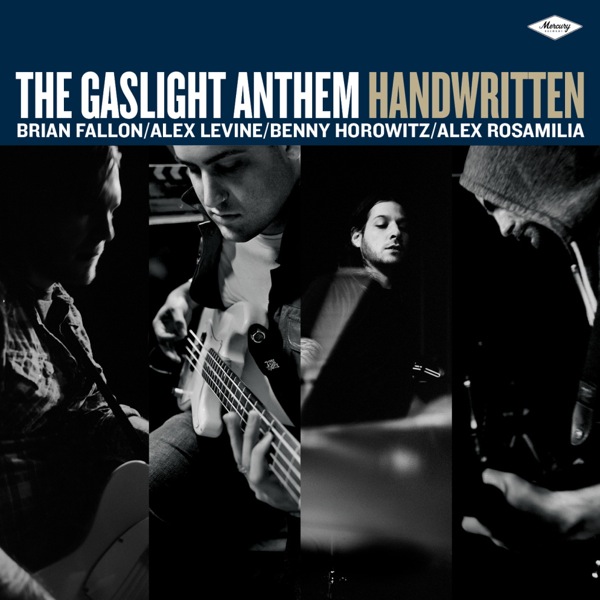
The Gaslight Anthem – Handwritten

I’m always excited when a new Gaslight Anthem album comes out. American Slang was one of my favorite records the year it came out, as was The 59 Sound before it. So I had high hopes for Handwritten, their debut on Mercury Records.

Then I found out Brenden O’Brien was producing it.

Brenden O’Brien is the guy behind several big-name records from the past fifteen or twenty years, including Bruce Springsteen’s The Rising and the Wallflowers’ Rebel, Sweetheart. And while I really enjoy both of those records, O’Brien has a tendency to make the production of all the records he does sound the same. They’re bright, shiny rock records, with strummed acoustics, chiming and chugging electric guitars, and deep drums.

And really, what we get here isn’t exactly bad: the band are all excellent musicians, and there’s definitely craft at work in these songs. But the writing doesn’t seem as sharp, the choruses don’t seem as catchy, and everything sounds smoothed out and rather murky. It’s glossy, arena-style production, and the already-weak songs suffer because of it.

It’s odd that everything ends up sounding so same-y, because O’Brien helps the band bring in some new instrumentation to fill out their sound. There’s organs and pianos in several songs, and many feature acoustic guitars more prominently (granted, the band’s used acoustics before, but never quite this much).

There are some decent songs here. “Here Comes My Man” is a ’60s girl-group song that swings and rocks all at once; “Keepsake” is standard Gaslight Anthem, but stronger than much of the other material on the album. “Howl” is pretty solid, and “National Anthem” shows quite a bit of promising growth for the band.

The bad, though, is mostly just bland and uninspired. “Handwritten” is standard fare for the band, but doesn’t do anything particularly well. Several of these songs – “Handwritten” chief among them – feel like leftovers from other albums, lesser versions of songs we’ve already heard.

Ultimately, Handwritten is a bit of a letdown, not because it’s bad but because it’s not as good as it could be. This is an album that doesn’t live up to the promise of its predecessors. Hopefully they’ll turn it around for the next album.

Ringo Starr – Ringo

Here’s another oldie but goodie from the days of the Blogspot blog. Enjoy!

Poor Ringo was always the least of The Beatles. He wasn’t the writing genius like Lennon or McCartney, he wasn’t a spiritual guru like Harrison. He was this affable little man with a big nose who had an extremely limited vocal range and who occasionally sang songs about underwater gardens and brightly-colored submarines. It’s difficult to take Ringo seriously, honestly.

This isn’t to say that Ringo is without his charms. He is affable, after all, and he has a certain charm to him that’s hard to deny. Ringo is just so damn likeable. He’s loveable, and you honestly want to see him do well. You root for Ringo.

And so when The Beatles broke up in 1970 and inevitably started releasing solo records, you knew it was only a matter of time before even Ringo jumped into it; because honestly, he’s a Beatle, and Beatle = instant chance. So he put out a couple of almost noveltyish records, and then released Ringo in 1972.

The thing about Ringo? It’s really pretty damn good. Ringo knows what folks want to hear from him–vaguely folky, bright, uptempo songs that are poppy, fun, and probably just a little superficial; it’s what we expect of Ringo–and he delivers here. There’s not really any filler on the record, which is to say that all the songs are pretty decent. There are standouts, of course: “Photograph,” a song he co-wrote with George Harrison, is a fantastic number, as is his cover of “You’re Sixteen.” “Oh, My My” is fun, and “I’m the Greatest” (written by Lennon) is a tongue-firmly-in-cheek celebration of status, even if it’s only presumed status in one’s own imagination. The record maintains a consistent feel, which is that of a good time with old friends. There’s nothing groundbreaking here, nothing as overwhelming as All Things Must Pass or as daring as Plastic Ono Band or as self-consciously homemade as McCartney. This is just a fun record, and it succeeds on that level very, very well.

The record also serves as an unofficial Beatles reunion of sorts. All three of Ringo’s former bandmates contribute not only songs for the record but themselves: each appear on at least the track they penned, and their presence offers a legitimacy to the whole affair. Also on hand are Klaus Voormann, old Beatle pal from the Hamburg days, Billy Preseton, and The Band, who offer assistance (along with Harrison) on the excellent “Sunshine Life for Me (Sail Away Raymond).”

The CD release of the album actually manages to sweeten the deal, adding three bonus tracks–including the single “It Don’t Come Easy”–to the already strong record. Really, if you have any love at all for old Ringo, this is a fantastic record (much better than…well, pretty much anything else he’s released). It’s a comfortable, fun, almost superficial (in the best possible sense of the word) album that it’s hard not to enjoy. You’ll tap your toes, you’ll sing along, you’ll be glad you’re listening to it. Not liking it would be like not liking a puppy, and do you really want to be known as the person who doesn’t like puppies?

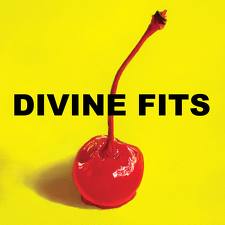
Divine Fits – A Thing Called Divine Fits

When I first heard “Flaggin a Ride” this summer, I was sitting in the car with my brother. He turned to me and asked, “Isn’t this that new band Britt Daniel’s in? It sounds just like Spoon. Why not just make another Spoon album?” And I’ll admit, I was hard-pressed to come up with a response. On the surface, A Thing Called Divine Fits could have easily been a new Spoon album, with its stripped-down instrumentation and choppy vocals. Sure, there are some snyths here and there, but that’s not too far from where the band’s been headed the past couple of albums anyway.

All that being said, it is a slightly different animal than your usual Spoon record. For one, Britt Daniel isn’t singing every song. The other two guys in this project (both of whom I’ve never heard of, and I can’t say I’m all that familiar with the bands they’re in, either) both bring their own thing to the table, really, and it ends up a bit of a mash-up between the sound of the three members’ own work.

Thankfully, it’s a solid album full of catchy, well-crafted songs. The aforementioned “Flaggin a Ride” wouldn’t have felt out of place on Transference, the last Spoon record. Really, all of Britt Daniel’s contributions here (including a cover of “Shivers”) are pretty solid, and the rest of the band throw in a few great tunes, too. “Would That Not Be Nice” is a standout track, while “Civilian Stripes” is an acoustic-driven ditty that breaks the tightly-wound tension of the first half of the album. That first half is pretty relentless, with driving rhythms, sharp and clipped vocals, and dueling guitars and snyths. It some of the best stuff I’ve heard all year, actually.

Ultimately, A Thing Called Divine Fits is a pretty solid debut from a group of guys who have spent years honing their respective crafts. It’s a nice summation of what these three musicians can do, and hopefully the first of many more albums to come from the group.

Bob Dylan and the Band – Before the Flood

Here’s another old album review from the dark, dark ages of 2004.

Before the Flood is a collection of cuts from a 1974 tour that Bob Dylan and the Band–both coming off mediocre albums–put on to recapture their audience’s attention. And damn did it ever work.

The Dylan cuts here seem as if they were performed by a man and a band possessed. He tears through familiar tunes in new arrangements and new settings, completely altering familiar songs until they were barely recognizable. And the songs that were recognizable were still so different and alien, the audience barely knew how to react.

That being said, the reinterpretations are phenomenal. Dylan has always made an effort to defy his audience’s expectations, and by the mid-’70s, they’d finally come to appreciate this fact and to embrace it. The roar of the crowd on the double album makes it clear that Dylan’s fans still love him and his music, however he may twist it and change it.

The Band’s tunes, which mostly appear in the middle of the set, are a brief respite from the storm. There are no surprises here–The Band play things pretty straight, giving close reads of some of their best-known tunes, including “Up on Cripple Creek,” “The Night They Drove Ol’ Dixie Down,” and “Stage Fright” on disc one, and “The Weight” on disc two. This straight-forward work by The Band on their original tunes actually works to the album’s advantage, though, as it provides a baseline against which to compare and interpret Dylan’s radical reworkings.

Dylan’s song selection stuck mostly to older, more established tunes from his first six or seven albums. Tunes such as “Like a Rolling Stone,” “Lay Lady Lay,” “Blowing in the Wind” (the album’s closer, in a very different version from the original solo acoustic), and numerous others seemed obvious and well-loved choices, but some of the tunes Dylan played were outside of expectations. Including “Ballad of a Thin Man” and “Highway 61 Revisited” from Highway 61 Revisited, and “It’s Alright, Ma (I’m Only Bleeding)” (played by Dylan solo acoustic at a breakneck speed) kept things even more varied and unpredictable.

Before the Flood captures Dylan and The Band at a performance ability peak, and presents them as a force of nature that tore through songs, the audience, and expectations. The results are phenomenal and worth listening to, and the album rivals any of the recent excellent Bootleg Series live shows. The record is a must-have for anyone who values the work of Dylan or The Band.

Bob Dylan – Tempest

I am, as even a cursory glance at this blog will readily prove, a pretty damn big Dylan fan. And when I heard he was putting out another album, I was – as is to be expected – pretty damn excited. And honestly, the album is pretty great. It’s got some solid songs on it, Dylan’s voice is in fine (albeit raspy, gravely) form, and I enjoyed it from beginning until almost the end. But…

Well, it doesn’t honestly grab me, y’know? Usually, with a Dylan album, I want to start it over again right after it finishes. That…didn’t happen here. This is an excellent album, but it’s an album I feel like I’ve already heard three times before.

Don’t get me wrong: there’s plenty of great stuff to be mined from the styles Dylan’s been working in since Love and Theft (still my favorite Dylan record of the past thirty years), but it feels like the always-restless Dylan is just spinning his wheels here. Dylan and his band still do their thing with skill and even finesse, but there’s nothing here he hasn’t already done before. There are no surprises, no sudden detours in an unexpected direction (either lyrically or sonically), and honestly, it’s just not what I was hoping for.

The positive side, though, is that if you haven’t heard anything by Dylan in the past ten or twelve years, this album will feel pretty fresh to you. And really, the songs are generally quite good. Things start off well with “Duquesne Whistle,” an old-fashioned train song done in an old fashioned style. The subtle steel guitar work is reminiscent of Hank Williams, Sr., which is never a bad thing. “Early Roman Kings” borrows the riff from “Mannish Boy,” but does it on accordion (which isn’t a surprise at all if you’ve heard Together Through Life, but it fits as though there’s never been any other way to play it). “Pay In Blood” is one of Dylan’s darker comic songs, featuring the recurring line “I’ve paid in blood, but it’s not my own.” Other songs, such as “Soon After Midnight” and “Narrow Way,” work very well, and the first half of the album is pretty fantastic.

The second half, though, is bogged down by the last two tracks: the sprawling, lethargic title track, a story song about the sinking of the Titanic that does nothing new or interesting with the topic, and the album’s closer, “Roll on John,” a tribute to John Lennon that borrows lyrics from several of Lennon’s own songs and feels about thirty years too late. They’re both duds, falling quite flat, and they bring the end of the record down considerably.

Ultimately, Tempest isn’t going to win any new converts to the Cult of Dylan. It’s good, but there’s really nothing to distinguish it from the three albums that came before. While I can’t fault Dylan for pursuing the styles and themes he wants to (it’s led to same damn fine music over the years), I’m starting to have a tough time following him down the path.

Delayed Reaction: Elliott Smith’s From a Basement on the Hill and the Posthumous Album Curse

I came to Elliott Smith a little late in the game: after his success had already led to major label records, before his untimely death. Like so many others, my introduction to his work was Either/Or, still one of the single best records ever (admittedly, I would also say the same about XO and probably Figure 8). I was upset when I learned about Smith’s death, because it meant we wouldn’t be getting anymore albums from him.

Then they announced From a Basement on the Hill, and I was both excited and very, very nervous.

See, I think there’s something definitely dangerous about the posthumous album. Releasing an unfinished record after the artist’s death is, at best, a gamble, and at worst a crass cash grab. Hell, Tupac’s released more albums since he died than he did when he was still alive. Unfinished work either ends up sounding like exactly that (unfinished, skeletal demos) or some sort of elegiac, overproduced thing that tries to cover up the fact that there wasn’t more than a verse and a half and most of a chorus put together before the guy died.

So I was worried about Basement, and I’ll admit that for the longest time, I did not care for the record. I ranked it down at the bottom of Smith’s catalog. Compared to any other album in his oeuvre (yeah, that’s right, I’m bustin’ out the French), it just didn’t fit. Bits of it were rough and ramshackle, while other parts felt overproduced, and the whole thing felt completely unlike any other Elliott Smith album. It didn’t feel like it was his. The fact that there was a fair amount of controversy over the production and mastering of the album when it came out only served to confirm my fears.

But today, I decided to give it a second chance. It was, after all, a collection of songs written by Elliott Smith, so there had to be something worthwhile in there. And I was surprised to discover that, in fact, while there are a couple of odd missteps, this is actually an album that fits in with his catalog and manages to almost synthesize all the different stages of his career.

The album opens with the atypical rocker “Coast to Coast,” a song that doesn’t have a comparison in the rest of his solo work. With the heavily distorted drums and grungy guitar, it sounds more like an outtake from his previous band, Heatmiser. However, it quickly bounces to more familiar territory, with the softly-plucked acoustic and multi-tracked vocals of “Let’s Get Lost” and the fuller sound of “Pretty (Ugly Before),” which would have felt of a piece with Figure 8.

What’s particularly interesting about the album is that it feels rather like Smith’s attempt to synthesize the Beatles’ Revolver into his own work. Not that this record sounds anything like Revolver, just that the guitars in several places bear a striking resemblance in tone and style to the guitar work on Revolver. It does feel like Smith is also attempting to push the boundaries of his style the way the Beatles did on Revolver.

I do think that this album is still the weakest of Elliott Smith’s career. The songs just don’t feel as complete or as tightly-plotted as on his other records. The lyrics aren’t as sharp, and feel too much like retreads of topics and themes he’s already addressed in other songs to better effect. It is by no means a bad record, just not as great as his other stuff. I’ve reconciled myself to this being the final Elliott Smith album (even if not the final collection of Elliott Smith recordings, as the wonderful 2006 collection of odds and sods, New Moon, proved). While not the best album of his all-too-short career, it’s still worth a listen.

The Minus 5 – Down With Wilco

Yet another of my old album reviews, this time for a Minus 5 record. Man, I need to go listen to this one again.

I bought this CD expecting it to be, essentially, a Wilco album with a couple of extra guys involved. In that respect, I was sorely disappointed–this is not a Wilco album, it’s a Minus 5 album on which Wilco play most of the instruments. But that’s not a bad thing, I discovered, because the Minus 5’s Down With Wilco is an album of many pleasures in its own right.

Sonically, the best way to describe Minus 5 is that they’re a hybrid of the Beach Boys, Village Green Preservation Society-era Kinks, the Byrds, and Neil Young. The melodies are lilting and infectious, the guitars range from gently-strummed acoustics to chimming twelve strings and Neil Young-esque electrics, and the harmonies sound very much as though the head of this project (a man named Scott McCaughey) has a huge Beach Boy fetish.

And he does–several of the songs display a Pet Sounds-era Brian Wilson type of arrangement, utilizing Wilson’s modular techniques and a wide range of instrumentation. Wilco provides most of the musicians for the set, but they tend to accommodate rather than forcing him and Peter Buck (of REM, who is also a key figure in this project. A few words about the “group”–it’s the side project of Scott McCaughey and Peter Buck, and they just have a rotating cast of supporting musicians. This time around, they hooked up with Wilco) to bend to their sound.

The most entertaining aspect of this record is the loose, free feeling of the music. Everything is tongue-in-cheek, everyone is wearing a smile while they play. You can hear it. There’s a feeling of whimsy and playfulness in this record that’s usually missing from Wilco’s very serious albums. While Wilco is still a great band (and one of my current favorites, as I might’ve mentioned), they don’t often crack smiles.

All of the tracks on this collection are winners. The opener, “The Days of Wine and Booze,” is an ode to loss and regret, a commitment to remember the old times, whether they were good or bad. “Retrieval of You” is a fairly straightforward song on paper–a man who lost the woman he loves because she became a pop star. But with its jaunty tune and laugh-out-loud funny lyrics (“They call me DJ Minimart, ’cause that’s where I work”), it rises above its basic premise. “The Town that Lost its Groove Supply” tells you everything you need to know in the title–witty, humorous, bouncy, and just plain fun. “I’m Not Bitter,” the most Wilco-sounding track on the collection, has a chanted call-and-response chorus of the phrase “I’m not bitter” over and over again, as though the narrator were trying to convince himself or his audience (you’re never sure which). The album closes with “Dear Employer (The Reason I Quit),” a Dear John letter to one’s place of employment that is both humorous and bittersweet.

But really, there’s not a bad song on the album. McCaughey is an excellent lyricist, and Wilco rises to the occasion musically and vocally. Jeff Tweedy, Wilco’s frontman, doesn’t take lead vocal duties often (only once exclusively, on “Family Gardener”), but provides excellent backing and harmony vocals throughout to McCaughey’s lead vocals.

Overall, the Minus 5’s Down With Wilco is an excellent, well-crafted album that takes a familiar band and casts them in a slightly different light. The result is one of the more enjoyable and cohesive albums I’ve listened to in a long time, and that’s saying something for a side project.